
|
|
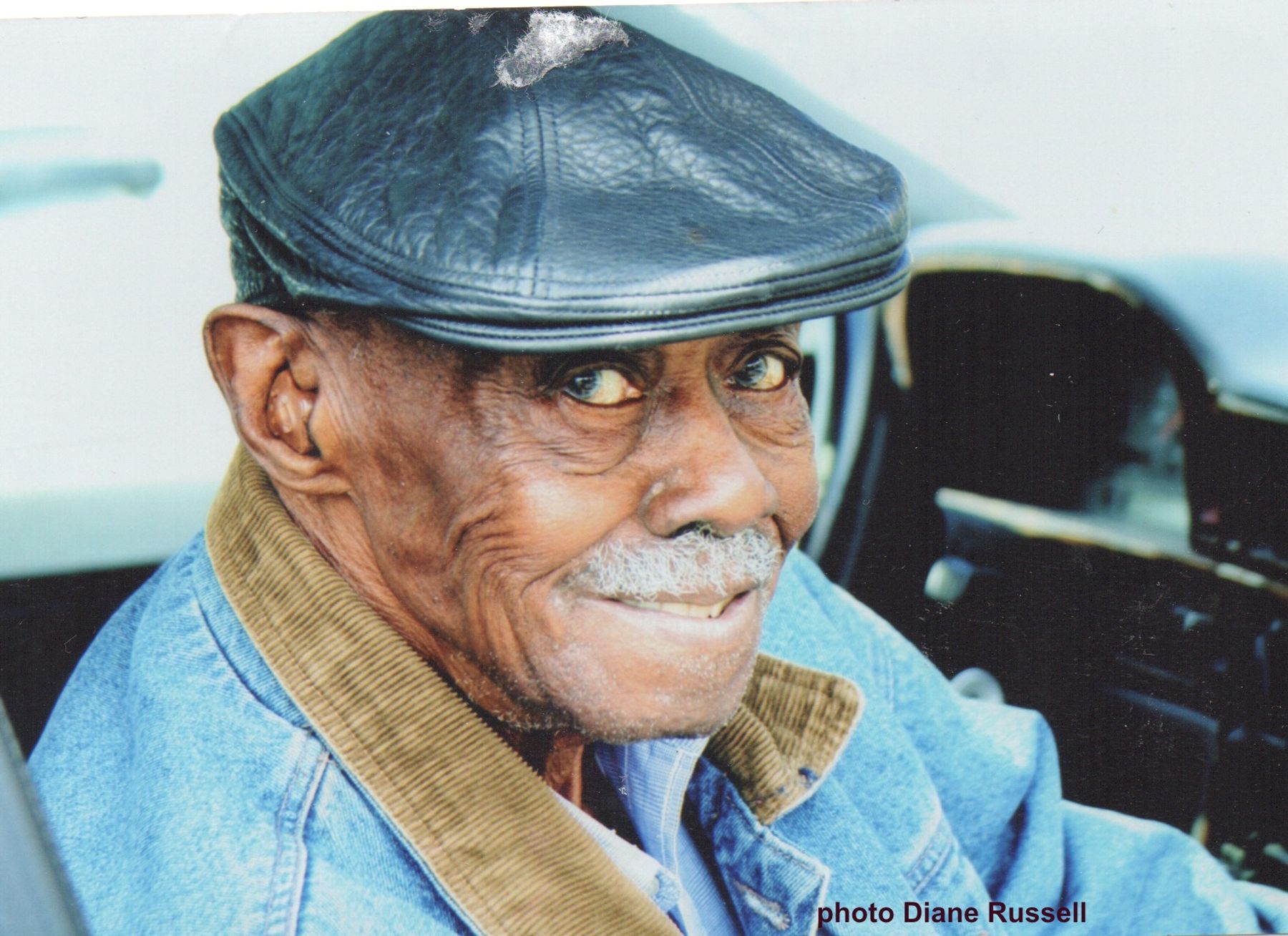
Pinetop Perkins' 80-year career still
going
By SHELIA BYRD (AP) CLARKSDALE, Miss.
Noisy
crowds in smoky bars don’t bother 96-year-old bluesman
Pinetop Perkins.
It’s all part of his job. Most nights, after he snuffs out
his menthol cigarette, Perkins slides onto the piano bench
in some club and eases into a wail about hard times and
treacherous women.
Perkins is believed to be the oldest of the old-time Delta
blues musicians still performing. In an 80-year career, he’s
traveled through juke joints, nightclubs and festival stages
shared with the likes of John Lee Hooker, Sonny Boy
Williamson and Muddy Waters.
In a telephone interview after a gig a week before
Thanksgiving at a jazz club in Oakland, Calif., the old
bluesman summed up his performance simply: “Looks like the
folks loved what I was doing last night.”
And he’s not done yet.
The two-time Grammy winner is at work on another album, due
out in 2010.
“I thank the Lord for me being here all the time. I play any
piano with a good tune,” Perkins said.
He’s outlived most of his contemporaries, though time has
slowed his steps and impaired his hearing. His colleagues
say the musical sagacity acquired from a lifetime in the
blues remains strong.
“Perkins is appreciated in 2009 not just for his survival,
but for being a classic Chicago bluesman,” said guitarist
Bob Margolin, a former Muddy Waters band member. “While many
younger musicians pay tribute to that music, Pinetop is that
music.”
Perkins comes from the generation of artists who worked
their way from the Mississippi Delta to Chicago, stopping in
Memphis and St. Louis along the way. They eventually fused a
new sound of country twang and urban grit that became known
as Chicago blues.
Perkins wasn’t formally taught on the piano. He learned by
watching others, and he still can’t read sheet music. Yet
his style has influenced rock icons like the Rolling Stones
and Ike Turner.
“I didn’t get no schooling. I come up the hard way in the
world,” Perkins told The Associated Press.
With age comes faded memories and blurred details, and
Perkins has difficulty recalling his experiences with Waters
and other bluesmen.
However, when asked about his longevity during a break at a
recent music tribute to him in Clarksdale, Perkins replied:
“I always try to do something different all the time.”
The Pinetop Perkins Homecoming was held in October at Hopson
Plantation, where Perkins worked as a tractor-driver in the
1940s.
About a dozen blues players performed before a crowd of
hundreds while Perkins sat quietly at a table, smoking
cigarettes, a habit he picked up at age 9. He’d played the
day before at the annual Arkansas Blues and Heritage
Festival.
“It’s simply amazing for a 96-year-old man to still be able
to perform on a piano like that. He just lays back and
relaxes and seems like the music just pumps out of his
fingers,” said Jimmi Mayes, a drummer who plays in the band
of another Muddy Waters band alumnus: Willie “Big Eyes”
Smith of Chicago.
In addition to playing the blues, Perkins seeks to nurture
them. The Pinetop Perkins Foundation was created to help
young blues artists. The foundation received a grant last
week from Morgan Freeman’s foundation to provide
scholarships for a blues piano workshop planned for next
August in Clarksdale, said Perkins’ manager, Pat Morgan.
Perkins and Smith are wrapping work on “Pinetop
Perkins-Willie Smith Joined at the Hip” for the Telarc
International label. The record, expected to be released
next spring, includes mostly original songs written by
Smith, Morgan said.
Perkins, whose real first name is Willie, was born in 1913
in Belzoni, Miss. He’s lived the evolution of blues music,
spending his early years playing in the Delta. In the 1940s,
he performed with Williamson on the popular King Biscuit
Time radio show broadcast daily on KFFA in Helena, Arkansas.
Perkins backed slide guitarist Robert Nighthawk on an early
Chess Records recording and toured with Turner in the 1950s.
Later, Perkins joined Muddy Waters’ band to replace pianist
Otis Spann in 1969.
For more than half a century, Perkins was content being a
blues sideman.
“He may not have been a front man all those years, but he
was there in the middle of it. He was skilled enough to be
able to stay and do it all of his life, and move from one
big band to the next and do it all as times changed,” said
Brett Bonner, editor of Living Blues Magazine.
“Boogie Woogie King” was Perkins’ first solo record in 1976.
Beginning in 1992 with “Pinetop’s Boogie Woogie,” he
released a string of 15 albums in as many years.
He won a Lifetime Achievement Grammy in 2005, followed by
the 2007 Best Traditional Blues Album for his collaboration
on the “Last of the Great Mississippi Delta Bluesmen: Live
in Dallas.”
|